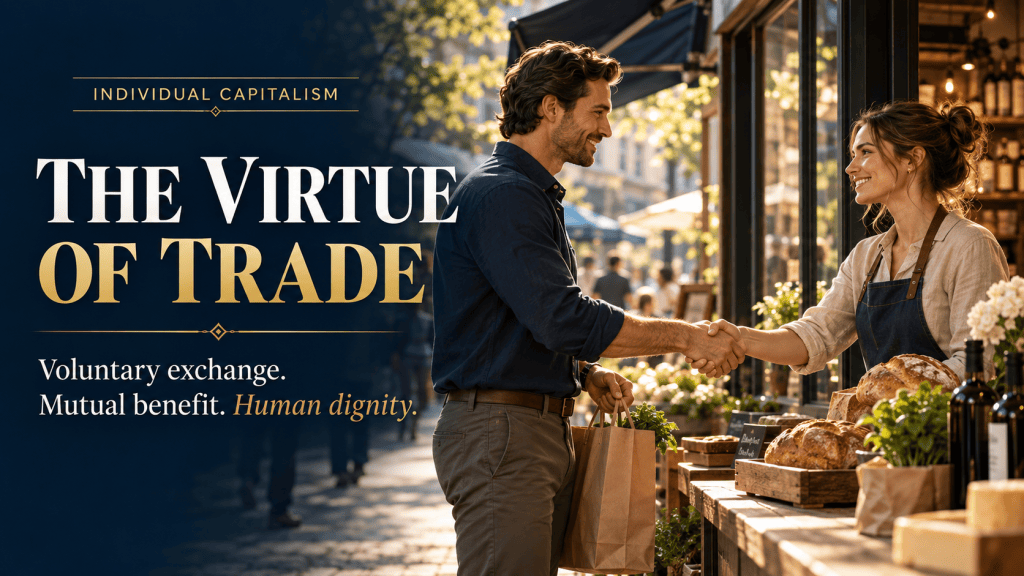
Trade is the lifeblood of capitalism — not just materially, but morally.
When two people trade voluntarily, they affirm each other’s rights and worth. They agree: You have something I value, and I have something you value. Let’s exchange.
There is no force. No entitlement. Just mutual benefit.
This is not exploitation. It is equality — the only kind that matters: equality of rights and respect.
In capitalism, success is not about taking. Your success is about making. It’s about creating something so valuable that others want to trade for it.
This applies to goods, services, skills, and the products of your ideas.
Trade fosters peace, not conflict — because it’s based on consent.
It builds bridges across cultures, languages, and borders because value speaks louder than dogma.
Capitalism is the system that elevates trade to virtue. It invites you to offer value to others by being your best self — productive, honest, and excellent.
And in that exchange, everyone rises.
Closing Thoughts: The Virtue of Trade
Trade is freedom in motion.
In every voluntary exchange, dignity is affirmed and value is shared.
To trade honestly is to prosper together — each rising by what each has created.
Key Idea
Trade is freedom in motion: a voluntary exchange in which each party judges the trade to be worthwhile.
Read Next
Related Articles
Continue exploring
Individual Capitalism is a connected Library. Follow the next article, explore a Reading Path, or browse the complete collection.

