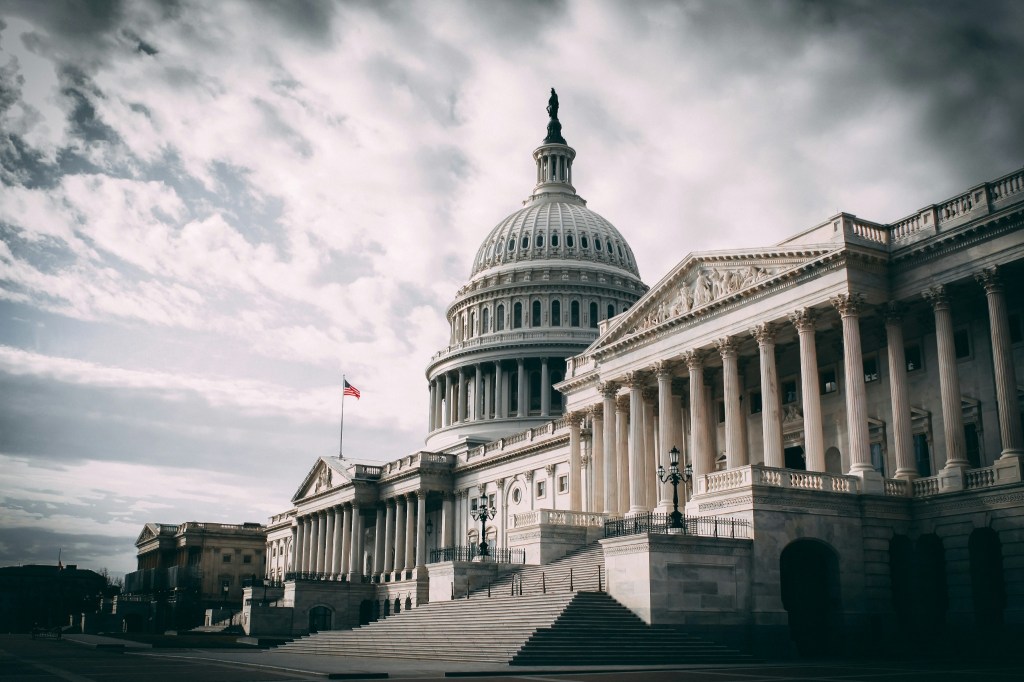
Government in a capitalist society is both necessary and potentially dangerous.
It is necessary because freedom cannot survive without law. Individuals need a stable system of objective rules protecting their lives, liberty, property, contracts, and freedom of association. Without such protection, production and trade become vulnerable to fraud, theft, intimidation, and violence.
Capitalism does not require the absence of government. It requires a government limited to its proper purpose: protecting individual rights.
Yet government is also dangerous. Unlike any private person or organization, government possesses the lawful power to use physical force. It can arrest, imprison, fine, tax, and wage war. That power is necessary when used to protect rights. When used to control peaceful individuals, it becomes an instrument of oppression.
History is filled with the victims of governments that escaped their constitutional restraints. Government is therefore like an immensely powerful machine: indispensable when properly designed and controlled, but destructive when neglected, corrupted, or placed in unscrupulous hands.
The Declaration of Independence identified the moral foundation of American government: individuals possess rights, and governments are instituted to secure them. But a declaration of principles was not enough. A Constitution was needed to translate those principles into a working system of laws, institutions, and limitations.
The Constitution was intended to create the machinery of freedom.
That is the proper meaning of legitimate government: not a master standing above the individual, but an institution created to protect the conditions in which individuals can live, think, produce, associate, and trade.
Individual rights are not gifts distributed by government. They are moral principles defining and protecting each person’s freedom of action in society.
They include the freedom to think, speak, write, own property, pursue a career, form relationships, enter agreements, and direct the course of one’s own life.
John Locke argued that the purpose of law is not to abolish or restrain freedom, but to preserve and enlarge it. Objective law protects liberty by preventing one person’s force or fraud from becoming another person’s chains.
In a free society, every individual has the right to pursue his own interests, provided he respects the equal rights of others. No person, group, corporation, or government may properly initiate force against peaceful individuals.
Government and the Retaliatory Use of Force
Government’s legitimate use of force is retaliatory. It responds to those who initiate force, commit fraud, violate contracts, steal property, or threaten the nation.
Its essential institutions are therefore the police, the courts, and the armed forces.
The police protect citizens from criminals. The courts resolve disputes according to objective law and impose penalties through due process. The armed forces defend the country against foreign aggression. Each institution has the same underlying purpose: to protect individual rights from the initiation of force.
Individuals retain the right to defend themselves when faced with an immediate threat. But self-defense is not the same as private punishment or personal revenge. If every person were free to decide guilt and administer punishment independently, justice would give way to feuds, vigilantism, and gang warfare.
Government centralizes the retaliatory use of force under objective rules of evidence, due process, and law. Its purpose is to replace private vengeance with impartial justice.
A functioning government allows people to carry on their daily lives in relative safety. They can work, build businesses, sign contracts, purchase homes, travel, raise families, and plan for the future without constantly fearing that violence will determine the outcome.
When government is too weak to enforce law, armed gangs and private factions fill the vacuum. Rights become meaningless because there is no reliable institution capable of protecting them.
Umpire or General Manager?
But the opposite danger is equally real.
When government expands beyond protecting rights, it begins violating the very freedom it was created to defend. Instead of acting as an umpire, it becomes a general manager, directing production, redistributing income, controlling peaceful choices, and deciding which individuals or industries will be rewarded or restrained.
The umpire enforces the rules. The general manager runs the team.
A free society needs the former, not the latter.
Modern government has assumed responsibilities far beyond its proper functions. Through the welfare state and the mixed economy, it intervenes in production, employment, prices, wages, trade, investment, housing, education, health care, and countless other areas of peaceful activity.
Each intervention may be presented as an isolated solution to a particular problem. Taken together, however, these interventions transfer economic decision-making from individuals to political authorities.
That changes the character of society.
In a market, people obtain value by producing, persuading, and trading. In a politicized economy, they increasingly seek value through lobbying, regulation, subsidies, tax advantages, government contracts, and restrictions on competitors.
Political influence begins to replace economic merit.
The result is not capitalism. It is a mixed economy, a shifting combination of private ownership and political control. Businesses may remain privately owned in name while their decisions are increasingly prescribed by regulators, legislators, and bureaucracies.
This union of political power and economic decision-making creates a dangerous system of favors and penalties. Politically connected groups compete for subsidies, protections, exemptions, and special privileges. Those without influence are forced to pay the bill or obey rules they had no role in creating.
Many monopolies and economic distortions blamed on capitalism have been created, protected, or strengthened by government privilege. Licensing restrictions, subsidies, exclusive franchises, bailouts, tariffs, and regulatory barriers can insulate established interests from competition.
In a genuine market, a company must continually earn its position by satisfying customers. In a politicized economy, it may preserve its position by satisfying politicians.
Separation of Economics and Government
This is why the separation of economics and government is as important to capitalism as the separation of church and state is to freedom of conscience.
The separation does not mean abandoning courts, contracts, property rights, or protection against fraud. It means that government does not direct production, control peaceful trade, dispense economic favors, or punish people for voluntary exchanges.
Capitalism is the separation of production and trade from political command.
For that reason, the phrase “state capitalism” is misleading. When the state owns, directs, or politically controls economic activity, the system is no longer capitalism in any meaningful sense. Private initiative has been replaced, or severely compromised, by government power.
The welfare state further weakens individualism by encouraging people to view wealth as a fixed pie distributed through political struggle. Every person becomes a claimant, every group becomes a competitor for government favors, and every new arrival may be viewed as another mouth consuming a supposedly limited supply.
But wealth is not merely divided. It is produced.
Human beings do not enter society simply to consume existing resources. They also think, work, create, invest, invent, and trade. A free individual can add far more to the economy than he consumes.
The welfare state obscures this fact. It transforms productive citizens into political interest groups and turns neighbors into rivals for benefits financed through taxation, borrowing, and monetary expansion. Policies originally presented as temporary assistance can gradually create permanent dependence and expanding political control.
The Deeper Issue Is Moral
The deeper issue is not only economic. It is moral.
A government that controls your choices increasingly controls the practical use of your mind. Freedom of thought is incomplete without freedom to act upon your judgment. An idea that cannot be tested, produced, published, financed, sold, or voluntarily exchanged has been separated from the action that gives it meaning.
You may still be permitted to think, but not to live by your thinking.
The defenders of the welfare state, the mixed economy, and socialism often present political control as compassion. They promise protection from risk, hardship, failure, and uncertainty. But their protection comes with a price: obedience and the loss of your freedom.
They treat adults as dependents who cannot be trusted to think, choose, produce, trade, or plan their own lives without political supervision.
Capitalism rests on the opposite view.
It holds that the individual is not a ward of the state. He is a sovereign human being with the moral right to direct his own life. Government exists to protect that sovereignty, not to replace it.
The goal, therefore, is neither an all-powerful government nor an absent one. It is a strong but strictly limited government: strong enough to protect individual rights and limited enough not to violate them.
Government should be the guardian of freedom, never its owner.
That is the government capitalism requires, and the only government worthy of a free people.
Key Idea
Government should protect individual rights, not direct peaceful production, trade, or personal choice.
Read Next
Your Life Is Your Own, Live Like It!
Related Articles
Continue exploring
Individual Capitalism is a connected Library. Follow the next article, explore a Reading Path, or browse the complete collection.

